What Happens When AI Builds 283,000 Companies Without Validating a Single One
Polsia raised $30M, built 9 AI agents to run companies autonomously, and created 283,381 companies. 94% are dead. The missing step? Nobody validated demand.
The most ambitious AI startup experiment of 2026 isn't happening in a lab. It's happening on a platform called Polsia, where nine AI agents — CEO, marketing, support, finance, engineering — run companies from end to end. No human employees. No human decisions. Just an idea in, and a company out.
The result? 283,381 companies created. $30 million raised at a $250 million valuation. And 94% of those companies are dead.
The platform reached $10.2 million in annual recurring revenue by taking $49/month plus a 20% cut of every dollar its AI-generated companies earn — including the ones that fail immediately. But the metric that matters isn't the revenue. It's how many of those 283,381 companies ever had a customer pull out a credit card. Only 16,447 companies are active. First-month churn hovers around 50%. Trustpilot rating: 1.9 out of 5.
Polsia didn't fail at building. It failed at the step before building. And at scale, that failure isn't a bug — it's a proof.
The Experiment
Polsia is the most extreme version of a trend every founder now lives inside: autonomous AI that takes an idea and turns it into a running business, no human in the loop. Founder Ben Cera built nine specialized agents — a CEO agent, a Social Media agent, an Email agent, Support, Ads, Finance, Planning, Research, and Code — each handling a different function of a real company.
The pitch is seductive: describe your idea, and AI spins up the infrastructure, the marketing, the payment processing. You don't hire. You don't manage. You just watch.
And 283,381 people signed up to watch.
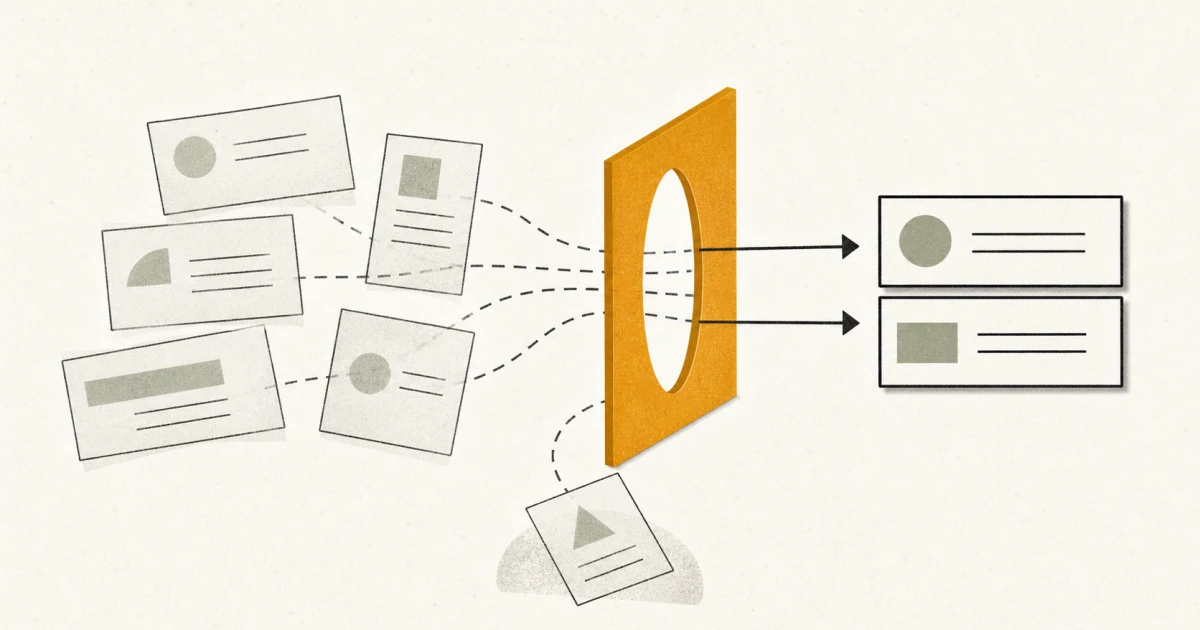
But here is what they actually watched: AI executing on ideas that had no market demand. The system provisions infrastructure regardless of whether anyone wants the product. An idea for a meditation app for dogs? Provisioned. A competitor to Amazon built on a $49 subscription? Provisioned. The CEO agent's business plan is just an opinion with formatting — confident, well-organized, and never checked against a single real buyer. The system does not pause to ask the question every experienced founder learns to ask first: does anyone actually need this?
A reviewer at Preuve AI described the gap precisely: "the missing step between idea input and infrastructure provisioning." The platform is engineered to build, not to validate. And when you build without validation at scale, you don't get companies. You get churn.
The Math of Failure
The numbers are stark:
- 283,381 companies created
- 16,447 active — that's 5.8%
- ~50% first-month churn rate
- 1.9/5 Trustpilot rating
- $49/month + 20% take-rate — users pay even when their AI-generated company fails immediately
This is not a story about AI being bad at business. The nine agents presumably execute their functions competently. The problem is upstream: the system never asks whether the business should exist in the first place.
The 94% failure rate isn't a technical failure. It's a validation failure, repeated 266,934 times.
And that's what makes Polsia instructive. It's the control group in the world's largest experiment on what happens when you remove validation from the startup creation process entirely. The result is unambiguous: most ideas, even when executed with perfect AI automation, produce nothing of value — because most ideas were never validated against real market demand.
The Missing Step
What would "validation" have meant for those 283,381 companies? Probably felt like homework — which is exactly why a platform built for speed was designed to skip it.
At minimum, it would have meant answering three questions before a single line of infrastructure was provisioned:
1. Are there real competitors already solving this? Not "are there vaguely similar products" — but direct competitors, substitutes, and adjacent tools that your target customer already uses. If five companies are already doing what you're describing, with established pricing and customer bases, your idea needs more than execution. It needs differentiation that matters to buyers.
2. Is there evidence of willingness to pay? Not waitlist signups. Not upvotes. Not "great idea" from friends. That's collecting encouragement instead of market signal — supporters give opinions, buyers give commitment. Actual payment behavior is what counts: past transactions for similar products, search volume with commercial intent, communities where people discuss paying for this exact problem.
3. What is the riskiest assumption — and what's the cheapest test to disprove it? Every idea rests on an assumption that, if wrong, kills the whole thing. For Polsia's companies, the riskiest assumption was almost always "someone wants this." The cheapest test? Ask five strangers who fit the target profile to describe the last time they paid for something like this. If none of them have, the idea isn't ready.
None of these three steps requires months of research. None requires a PhD. None requires abandoning the idea entirely — sometimes the answer is "revise the positioning" or "target a different segment." But skipping all three steps and jumping straight to infrastructure provisioning is how you join the 94%.
What This Proves at Scale
The Polsia story isn't just about one platform. It's the logical endpoint of a broader trend: the build-without-validate default that AI tools have accelerated across the entire startup ecosystem.
When you can vibe-code an MVP in a weekend, the temptation to skip validation becomes overwhelming. Building feels productive. A compiler can't reject you. But the market can — and it will, silently, until the day you launch to crickets.
MIT's 2026 study of 4,867 developers found that AI tools deliver a real but modest 26% productivity gain — about half what early lab experiments promised. The bottleneck was never going to be code generation speed. The bottleneck was always going to be knowing what to build.
Polsia proves this at the most extreme scale possible: when you remove every human bottleneck except the decision of what to build, what you're left with is 94% failure. The building was never the hard part.
How to Not Be Part of the 94%
The antidote isn't complicated, but it requires discipline that feels unnatural when building is this easy:
Validate demand before you validate your idea. Most founders use validation backward — they look for evidence that their idea is good. Real validation looks for evidence that the idea might fail, and only proceeds when it can't find any.
Separate evidence from inference. "My target market is growing" is not the same as "people in my target market will pay for my product." The first is a market signal. The second is an assumption dressed up as a conclusion. Every validation claim should carry a label: verified by source, reasonable inference, or unverified assumption.
Test the riskiest assumption first. Don't spend weeks on competitor analysis if the real risk is that nobody will pay. Don't optimize your pricing tiers if the real risk is that a free alternative already owns the market. Find the single thing that, if wrong, kills the whole idea — and test that with real strangers before you touch anything else.
Accept "pass" as a win. The most expensive outcome isn't a failed validation. It's passing on an idea after six months of building, instead of passing on it in 20 minutes and moving to the next one. A "pass" verdict that saves you six months isn't a failure — it's proof of the oldest rule in this game: a day in the library saves six months in the lab.
The 16,447 companies that survived on Polsia didn't survive because the AI agents were better at marketing or smarter about pricing. They survived because the underlying ideas happened to have real demand — demand the system never checked for, but that existed anyway.
You don't have to rely on luck, and you don't have to build in a bunker only to come out and discover nobody wants what you made. The question that would have saved 266,934 companies is the same one every founder can ask before writing a single line of code: does anyone actually want this?
And unlike Polsia's nine AI agents, you can choose to find out before you build.